• My Coffee Routine, Also Known as My Daily Survival Strategy

    My Coffee Routine, Also Known as My Daily Survival Strategy

    Coffee and I don’t have a dramatic love story. There was no slow‑motion moment where our eyes met across a crowded café. No violins. No destiny. Just me, half‑awake, realizing that life is simply better when caffeine is involved.

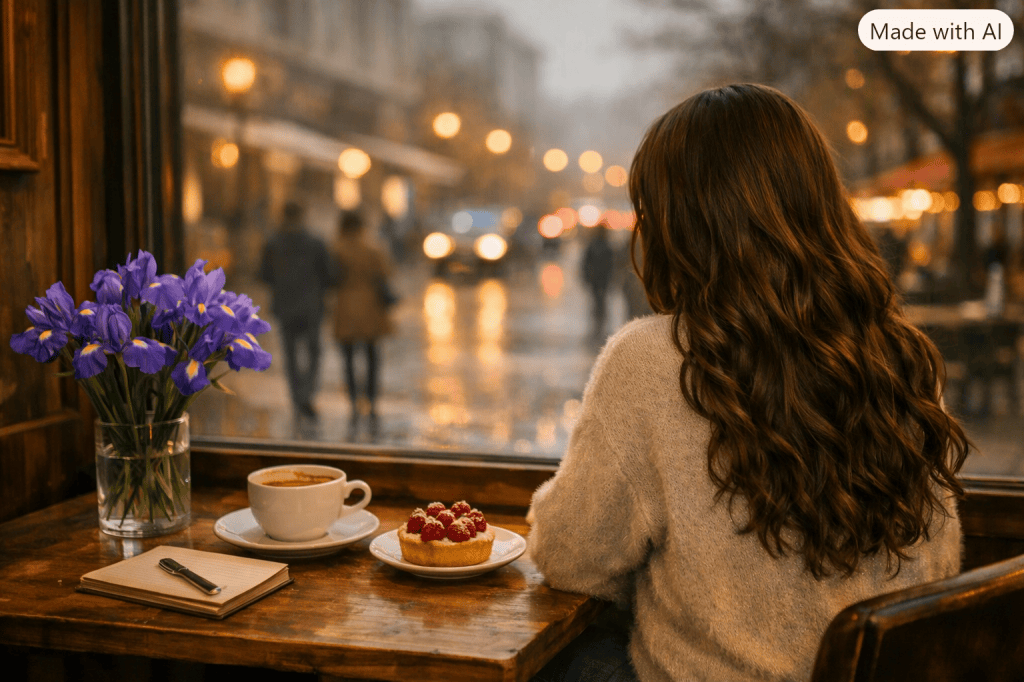
    My mornings begin with a cappuccino made with skim milk, not because I’m trying to be healthy, but because anything heavier turns my stomach into a drama queen. This cup is my morning therapist. I hold it while getting ready, pretending I’m the kind of person who has her life together before 9 AM. The warmth, the steam, the way the cup fits in my hands… it’s the only part of my morning that doesn’t judge me.

    By 10 or 11 AM, I’m ready for round two: the V60.

    If the weather is hot, I make it iced.
    If the weather is cool, I make it hot.

    This tiny decision somehow convinces me I’m in control of my life. I take it with a piece of chocolate, because I deserve rewards for simply existing. The V60 is slower, more thoughtful, the kind of coffee that forces me to pause and pretend I’m a calm, collected adult before the day starts sprinting again.

    Then there are the chaotic days.

    The days where I go for a third coffee around 4 or 5 PM.
    An espresso, short, sharp, and slightly reckless.

    This is the moment I look at myself and think, Should I? And then I do. It’s my tiny act of rebellion, my way of saying, “Yes, I know this might keep me awake, but honestly, at this point, what’s one more bad decision?” That late‑afternoon espresso feels like a secret handshake with myself for surviving the day.

    Coffee has seen me in every mood, sleepy, overwhelmed, hopeful, dramatic, and occasionally feral. It never asks questions. It never complains. It just shows up, warm or iced, ready to be whatever I need it to be.

    It’s not a grand romance.
    It’s not a poetic saga.

    It’s a simple, everyday relationship, the kind that makes my mornings softer, my afternoons steadier, and my entire life slightly more tolerable.

  • Kill them with kindness

    Kill them with kindness

    The biggest lie I ever heard is that if you’re nice to others, they will be nice to you as well.
    That sentence sounds so gentle, so hopeful, so perfectly packaged for children’s books and motivational posters. But in real life, it’s messier. People are messier. And kindness, despite what we were taught, is not a currency you trade for guaranteed returns.

    We’re raised on the idea that kindness is a boomerang throw it out, and it will circle back to you. But anyone who has lived long enough knows that’s not how the world works. Kids learn this early: they share a toy, and another child might grab it and run. They offer a cookie, and someone might take two. They smile, and someone might ignore them completely.

    Kindness doesn’t always inspire kindness. Sometimes it inspires entitlement. Sometimes it attracts people who take without giving. And sometimes it simply goes unnoticed.

    But here’s the twist: that doesn’t make kindness a mistake.

    Being nice isn’t a strategy. It’s not a transaction. It’s a reflection of who you are, not who the world is. When you’re kind, you’re choosing your character, not your outcome. You’re choosing to stay soft in a world that can be sharp. You’re choosing to act from your values, not from fear of being taken advantage of.

    And yes, it hurts when kindness isn’t returned. It stings when you pour warmth into someone who responds with coldness. But the absence of reciprocity doesn’t erase the goodness of the act. It doesn’t make you foolish. It makes you human.

    The kindness that truly counts is the one you give without expecting applause, reward, or mirrored behavior. It’s the quiet kind, the one that stays even when others don’t. The one that reflects your integrity, not their manners.

    The biggest lie is that kindness guarantees kindness.
    The biggest truth is that kindness guarantees clarity, about who you are, and who others choose to be.

  • Changing the Ending

    Changing the Ending

    There’s a line I heard recently that settled into me like a quiet truth: “you can’t go back and change the beginning, but you can start where you are and change the ending”.

    It felt like someone had opened a window in a room I didn’t realize had grown stuffy. Because isn’t that what we all secretly wish for sometimes one more chance to rewrite the parts of our story that still sting a little, the chapters we wish had gone differently, the versions of ourselves we wish we had been.

    But life doesn’t hand out rewinds. It hands out moments. Small ones, ordinary ones, disguised-as-nothing ones. Moments where you pause, breathe, and decide that the next step you take will be different from the last. That’s where the ending begins to shift.

    I’ve been thinking about how much energy I’ve spent replaying old scenes, trying to understand them, fix them, soften them. As if the past were clay I could still mold. But the truth is gentler than that: the past is a place I visited, not a place I live. And the door out of it has always been open.

    So today, I’m choosing to start exactly where I am, messy, hopeful, learning, unlearning. I’m choosing to stop tugging at old threads and instead weave new ones. Threads that feel calmer, kinder, more like the person I’m becoming rather than the person I used to be.

    The beginning is already written. But the ending… the ending is still mine. And maybe that’s the most comforting part of all.

  • Carb Is Love, Carb Is Life, and I’m Back

    Carb Is Love, Carb Is Life, and I’m Back

    Let’s get one thing straight: carb is love, carb is life.
    Anyone who says otherwise is clearly living a joyless existence powered by sadness and air.

    Yesterday, the shopaholic version of me, the one who swipes her card like it’s a form of self‑care, made a glorious comeback. And what did she find? Two divine pieces of clothing that looked at me and said, “We get you.” Not because they define me, but because they understand my priorities: carbs first, logic later.

    Exhibit A: The T‑Shirt of Truth

    A croissant in red heels, holding a coffee mug like it’s late for brunch. Underneath it? The word “ESSENTIAL.”
    Because obviously.
    Croissants are not optional. They are oxygen with layers. They are therapy disguised as pastry. They are the reason mornings exist.

    Exhibit B: The Pajama of Power

    A white pajama set with the words “pastry club.”
    Now, don’t get it twisted, pastry club isn’t for everyone. It’s exclusive. It’s elite. It’s the kind of club where entry requires emotional devotion to carbs. Once you’re out, you’re out for life. No second chances. No “I’ll just have one bite.” You either live for carbs or you don’t deserve the croissant.

    So yes, I bought them both. Because carbs deserve representation.
    Because fashion should be flaky.
    Because I’m not just wearing clothes, I’m wearing a manifesto.

    And honestly? Life’s too short to pretend lettuce is exciting.
    Carbs are the main character.
    Carbs are the plot twist.
    Carbs are the reason I’m smiling while holding shopping bags like trophies.

  • A Million Dreams – Chapter Five: The Quiet Life I Haven’t Chosen Yet

    A Million Dreams – Chapter Five: The Quiet Life I Haven’t Chosen Yet

    There’s a dream I keep tucked in the quiet corners of my mind, the kind that drifts in during slow evenings or early mornings. It never arrives loudly. It just slips in, like a soft thought I didn’t invite but don’t want to let go of. In that dream, I live somewhere far, beautifully far, in a place like New Zealand. A midsized town, calm and scenic, where the roads curve gently and the mornings feel like they were designed just for me.

    I live alone there. Not in the way people fear, but in the way that feels like choosing myself instead of waiting for someone else to choose me, I’m not waiting to be picked, not hoping to be someone’s priority, not shrinking to fit into someone else’s life. In this dream, I am enough for my own company. I am the person I come home to. I am the one I choose.

    The town is quiet, almost protective. It feels like a place built for healing, the kind of healing that doesn’t demand explanations or apologies. A place where I can leave the noise of the world behind, the expectations, the disappointments, the ache of waiting for doors that never opened. Here, I build a life with my own hands.

    I run the sweetest little coffee shop–deli–bakery you can imagine. The ground floor smells like fresh bread and roasted beans, and upstairs is my loft, my small, warm world, where I keep my books, my blankets, my mismatched mugs, and the cinnamon I sometimes forget to restock. The loft is messy in the charming way, lived‑in without apology, a space shaped entirely by me.

    I wake up before sunrise, stepping into the soft blue of dawn. I start the coffee machines, listening to their familiar hum, the kind of sound that becomes a companion over time. Then I bake the dough I shaped the night before, watching it rise in the warm glow of the oven. Those early hours feel magical, quiet, steady, full of small rituals that remind me I can create beauty without anyone else standing beside me.

    By 6:30 or seven, I open the doors for the morning crowd. The familiar faces, the sleepy smiles, the regulars who communicate entirely through eyebrow raises until their first cup of coffee. They become part of my rhythm, part of the heartbeat of my days. I learn their orders, their moods, their silence. They learn mine. And yet, I remain whole on my own, connected, but not dependent.

    I take my lunch break outside, always. I sit with whatever new sandwich I invented that week, some brilliant, some questionable, and I eat slowly, watching the town move around me. I close before sunset because in this dream, I respect the sun more than the clock. I walk through the town as the sky melts into gold, watching the light stretch across the road like it’s blessing everything it touches.

    At night, I head back to my loft. The fireplace crackles softly, warming the room in that way only real fire can. I drink something hot, talk to myself about nothing and everything, and eventually drift to sleep with a book half‑open beside me. The world feels small, but not in a limiting way, small like a held breath, small like a secret, small like peace.

    And the next day, I do it all again. The same routine, the same joy, the same simple life that somehow feels extraordinary. A life built from small rituals, quiet work, and gentle love for my own company. A life where choosing myself isn’t a consolation prize, it’s the beginning of healing. A life that makes me believe that dreams don’t have to be loud to be beautiful.

  • When You Finally Realize You’re Not Wanted

    When You Finally Realize You’re Not Wanted

    There comes a moment, quiet, sharp, unforgettable, when you finally understand that you’re not wanted. Not really. Not in the way you hoped, not in the way you tried to convince yourself. It’s the kind of realization that doesn’t explode; it sinks. It settles. It whispers, “You were never chosen. You were never even considered.”

    For a long time, I thought I was at the bottom of the list. That maybe I was just a low priority, someone people remembered only when life slowed down. But then came the truth, the kind that doesn’t soften itself, I wasn’t even on the list. Not a choice. Not a thought. Maybe an afterthought, maybe not even that.

    It breaks something inside you.
    Something small, but essential.
    Something you didn’t know was fragile until it shattered.

    You start to see yourself the way the world seems to see you: expandable, replaceable, easy to leave behind. A broken shell missing her stolen pearl, walking around with a hollow space where something precious used to be. You try to pretend it doesn’t hurt, but it does. It hurts in the quiet moments, in the pauses, in the places where hope used to live.

    And yet, there’s a strange clarity in heartbreak. A moment where you look at the scattered pieces of yourself and realize you can’t keep waiting for someone to pick them up for you. No one is coming to save you, to choose you, to place you gently back together.

    So you gather the broken bits and pieces yourself.
    Slowly.
    Tenderly.
    Like someone learning how to care for a wounded thing.

    You move on, not because you’re suddenly strong, not because you’re healed, but because staying hurts more than leaving. Because you deserve to be on someone’s list. You deserve to be wanted without hesitation. You deserve to be chosen without begging for space.

    This isn’t the end of your story.
    It’s the moment you stop shrinking yourself to fit into places that were never meant for you.

    It’s the moment you finally walk away from the door that never opened.

  • The Weight of What We Give Up

    The Weight of What We Give Up

    Sacrifice is such a quiet word. It doesn’t shout, it doesn’t announce itself, it doesn’t ask for applause. It just sits there, tucked inside the choices we make, the ones nobody sees, the ones we don’t talk about, the ones that change the shape of our lives.

    Parents know this better than anyone. They give up sleep, time, dreams they once held tightly. They trade parts of their future so their children can have one. They let go of careers, opportunities, versions of themselves they never got to meet. And they do it with a strange mix of love and grief, because loving someone that deeply means accepting that you will lose pieces of yourself along the way.

    Loved ones do it too. People sacrifice for each other in ways that don’t always make sense on paper. A job in another country. A chance to study abroad. The possibility of building a family. The comfort of staying in a familiar life. Sometimes even the love itself, letting go of someone because holding on would hurt them, or hurt you, or hurt the future neither of you is ready for.

    There’s a particular kind of heartbreak in sacrificing your safe space, the place where you feel understood, protected, seen. Giving that up for someone else feels like peeling off your own skin. And yet people do it, because love makes us believe that maybe, just maybe, the discomfort will be temporary, and the reward will be worth it.

    But here’s the part we don’t admit out loud:
    Sometimes sacrifice feels noble.
    Sometimes it feels necessary.
    And sometimes it feels like a mistake.

    People sacrifice because they hope. Because they fear losing someone. Because they want to be good. Because they believe love requires effort. Because they think they’re strong enough to carry the cost. Because they imagine a future where everything they gave up will come back to them in a different, better form.

    But after the sacrifice, when the dust settles, the feelings are complicated.

    Sometimes there’s pride, the quiet kind that comes from knowing you chose love over comfort.

    Sometimes there’s peace, the kind that whispers, I did the right thing.

    And sometimes there’s resentment, a slow-burning ache that grows when the sacrifice isn’t acknowledged, or appreciated, or reciprocated.

    Sometimes there’s regret, the kind that wakes you up at night wondering who you could have been if you hadn’t given so much.

    And sometimes there’s nothing at all, just a numb acceptance that life moved forward, and you moved with it, even if you didn’t want to.

    So is sacrifice worth it?

    The truth is painfully human:
    It’s worth it only when the love grows from it.
    Only when the person you sacrificed for meets you halfway.
    Only when the loss becomes part of a bigger gain.
    Only when you don’t disappear in the process.

    But when it’s not worth it, the hurt is sharp. It makes you question your judgment, your heart, your loyalty. It makes you wonder why you gave so much to someone who didn’t know how to hold it. It makes you rebuild yourself from pieces you didn’t expect to lose.

    Still, people keep sacrificing.
    Because love, in all its messy, irrational, human glory, asks us to.
    And because hope, even when it betrays us, is a stubborn thing.

  • Confessions of a relapsed shopaholic

    Confessions of a relapsed shopaholic

    I have a confession, and honestly, it’s not even a dramatic one, just painfully predictable. I am an emotional shopper. A textbook case. A walking, talking, mall‑wandering cliché. I shop when I’m upset, overwhelmed, annoyed, bored, or when the weather looks at me the wrong way.

    I’ve tried to stop this habit. I’ve given myself speeches, pep talks, promises, even a few threats. And for a while, I actually behaved. I stayed away from malls like they were toxic exes. I convinced myself I didn’t need anything. I even believed it… until today.

    Today, I relapsed.

    I couldn’t hold it together anymore, so I did what any emotionally unstable shopaholic would do: I went to the mall. With absolutely no plan, no list, no reason. I told myself I’d buy a couple of formal outfits for work, you know, something sensible, something practical, something that would make me feel like a functioning adult.

    Spoiler: I found nothing.
    Nothing felt right.
    Nothing sparked joy.
    Nothing whispered “take me home.”

    But the problem was… I had to buy something. My emotional stability depended on it. So I did what any desperate person would do, I called my sister and asked if she wanted anything. When she said yes, I felt a wave of relief wash over me. Finally, a purpose. A mission. A socially acceptable purchase.

    I got her what she needed, but then I stood there thinking, This can’t be it. This can’t be the only thing I buy. I came all the way here. I suffered the mall lighting. I walked through the heat. I deserve more.

    And that’s when the real relapse happened.

    Because right now, Kuwait weather is aggressively hot. Winter is months away. No sane person is buying winter clothes. Which is exactly why I did.

    Two winter hoodies.
    Two matching pants.
    Zero logic.
    Maximum joy.

    The moment I tried them on and they fit perfectly… I felt something I haven’t felt in a long time. That tiny spark. That ridiculous, indescribable happiness that only shopaholics understand. The “this makes no sense but I love it” feeling. The “I shouldn’t have done this but I’m so glad I did” rush.

    I missed that feeling.

    And yes, I admit it: it’s an addiction. A soft, cozy, hoodie‑shaped addiction. But at least this time, my relapse came with matching pants.

  • A Million Dreams – Chapter Four: Grow As We Go

    A Million Dreams – Chapter Four: Grow As We Go

    Sometimes I imagine an alternative life for myself, one that feels both impossible and completely within reach. A life on a farm, not the distant, one‑hour‑away farms we have here in Kuwait, but a dream version only fifteen minutes from the city. In that dream, the land is wide and generous, stretching out like a soft promise. There’s a main house with a swimming pool to survive the summer heat, and a few small huts scattered around for family who want to stay over. It’s a place built for slow mornings, warm evenings, and a kind of peace that feels like it belongs to another world.

    In this dream life, we grow everything ourselves. Fruits, vegetables, citruses glowing in the greenhouse, and a lake filled with fish that shimmer under the sun. Ducks glide across the water like tiny boats, and somewhere far from the main house, for allergy reasons, sits a quiet beehive humming with life. We’d have goats, three cows, sheep, and chickens, each one part of the rhythm of the farm. And of course, the tenants who never pay rent: the cats. They’d wander around like tiny guardians, keeping the place clean of pests and pretending they own the land. A short‑haired German Shepherd would watch over everything, loyal and calm.

    The heart of the home would be the outdoor kitchen. When the weather turns gentle, we’d cook outside, letting the breeze carry the smell of spices and fresh herbs. I imagine a wood‑burning oven built with love, where I bake warm breads and sweet treats for my family. The kids would run freely across the property, stopping to pick fruits and vegetables straight from the trees and soil, their tiny hands helping us prepare meals that taste like sunshine and effort. They’d grow up knowing the magic of real food, the feel of earth, and the joy of being part of the process.

    And in the quiet moments, when the sun begins to set and the sky softens, my husband and I would walk together around the farm. Just the two of us, moving slowly through the life we built with our hands and our hearts. A simple, quiet life. A life full of love, nature, and the kind of calm that feels like a blessing. A lovely place to raise a family and a dream I carry gently, knowing that even if it never becomes real, it will always live beautifully in my imagination.

    Always…

  • Abandoning carbs

    Abandoning carbs

    Alright, sit down.
    We need to talk about you.

    Because Carbs is losing it.
    Not a little.
    Not politely.
    Full meltdown.
    Full telenovela.
    Full “crying into a croissant while staring out a window like it’s raining even though it’s not.”

    And it’s your fault.

    You were sneaking around with Carbs like you were starring in a dramatic romance trailer.
    You whispered “just one bite” like it was a confession.
    You held Carbs like you were about to be separated by a closing elevator door.

    Then choose to go back to Keto.

    Back to your structured, stable, “I’m a new man now” routine.
    Back to your meal plans.
    Back to your macros.
    Back to your “I feel lighter” speeches.

    Carbs is thrilled.
    Carbs is glowing.
    Carbs is absolutely not Googling “how to get over someone who chooses Keto.”

    You know what’s hilarious?
    You always bragged about how Keto kept you “calm,” how Keto made you feel “focused,” how Keto helped you “stay on track.”
    And yet every time you sprint toward Carbs like she was the last slice of cake at a birthday party.

    Remember when you said you were having “just a small bite”?
    That wasn’t a bite.
    That was a reunion special.
    That was a comeback tour.
    That was a documentary on emotional weakness.

    But now?
    Now you’re pretending Carbs was just a “moment.”
    A “slip.”
    A “cheat day.”

    Carbs was not a cheat day.
    Carbs was a whole season arc.
    Carbs was the cliffhanger.
    Carbs was the reason viewers tune in.

    You craved Carbs.
    You whispered things like “I missed this” and “I needed you.”
    You looked at Carbs with the kind of passion like never before .

    And yet…
    You went back to Keto.

    You’re walking around proud of yourself.
    You’re avoiding Carbs like they’re paparazzi.
    You’re pretending bread is invisible.
    You’re treating pasta like it’s radioactive.
    You’re acting like pancakes are a trap set by the universe.

    Meanwhile Keto is there, calm, supportive, structured, the nutritional equivalent of a well-organized closet.
    She’s cheering you on.
    She’s helping you feel balanced.
    She’s giving you stability.

    And honestly?
    Carbs gets it.
    Keto is good for you.
    Keto is consistent.
    Keto is the one you choose when you’re trying to be your best self.

    But Carbs also knows you.

    One day, maybe after a long week, maybe after a stressful event, maybe after you forget what actual joy tastes like you’ll think of Carbs.
    You’ll remember how comforting Carbs was.
    How dramatic .
    How messy.
    How fun.

    And maybe you’ll want to come back.
    Maybe you won’t.

    Either way…
    Carbs is leaving .
    Not angry.
    Not offended.
    Just dramatically eating a croissant, waiting for the next time you “accidentally” pass by a bakery.