
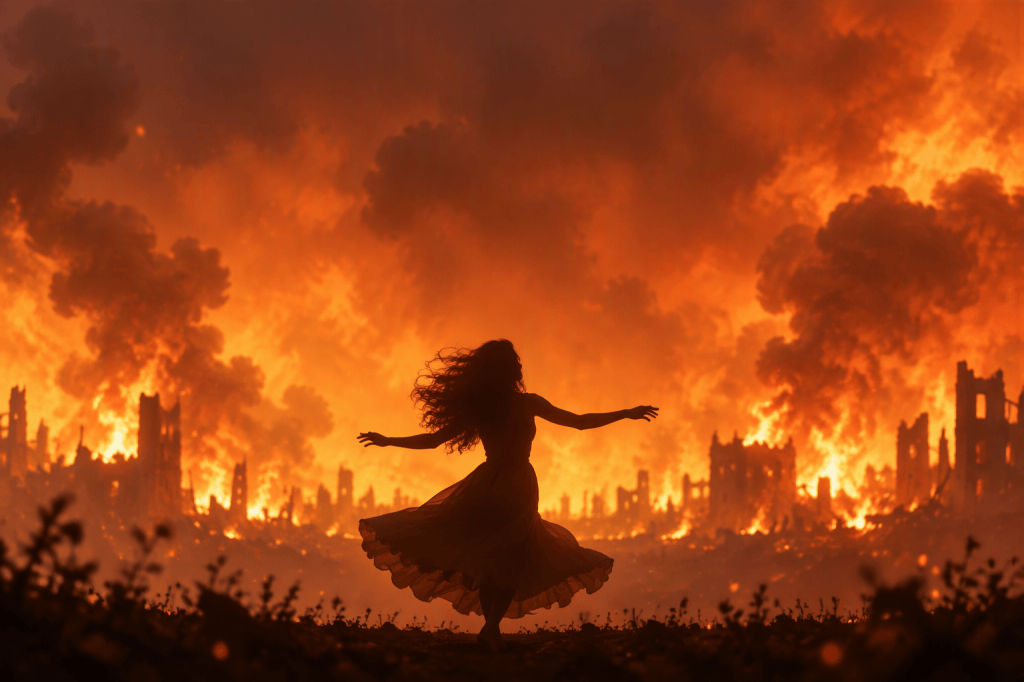
The truth is, she didn’t start the fire.
Some of the flames were born from other people’s expectations. Some from old disappointments. Some from wounds that were handed to her long before she knew their names.
For years, she moved from blaze to blaze carrying buckets that were never hers to carry. She soothed. Explained. Fixed. Forgave. Absorbed.
She believed that if she loved enough, gave enough, and sacrificed enough, she could keep everything from burning.
Everyone.
Including the people who kept striking matches.
So she became the dependable one.
The strong one.
The one who stepped forward while everyone else stepped back.
The one who stayed long after she should have left.
The one who cleaned up messes she didn’t make.
The one who carried consequences that belonged to someone else.
At first, it felt noble.
Then it became exhausting.
Then it became her identity.
Years passed before she noticed that the fires never really disappeared. Every flame she extinguished seemed to return somewhere else. Every crisis she solved created another responsibility. Every burden she picked up made people more comfortable handing her the next one.
And slowly, quietly, she began to understand something she had spent her whole life avoiding.
Not everything burning was hers to save.
Some lessons belong to the people creating them.
Some consequences belong to the people choosing them.
Some endings arrive because they need to.
And some fires must be allowed to burn.
Not out of cruelty.
Not out of revenge.
But because saving everything is not the same thing as living.
One day, she stopped running.
She stopped explaining.
She stopped rescuing.
She stopped volunteering to hold together things that were already falling apart before she arrived.
She set the bucket down.
The world called it selfish.
The world often mistakes boundaries for selfishness when it has grown accustomed to your sacrifice.
But it wasn’t selfishness.
It was surrender.
It was wisdom.
It was finally understanding that her worth was never measured by how much she could endure.
The flames continued to rise around her.
People expected panic.
People expected guilt.
People expected her to pick up the bucket one more time.
Instead, she danced.
Not because the fire was beautiful.
Not because destruction was joyful.
But because she was finally free from the impossible responsibility of saving everything.
And for the first time in a very long time, she remembered what it felt like to save herself.
“She didn’t start the fire. One day, she simply refused to keep putting it out.”

Leave a comment