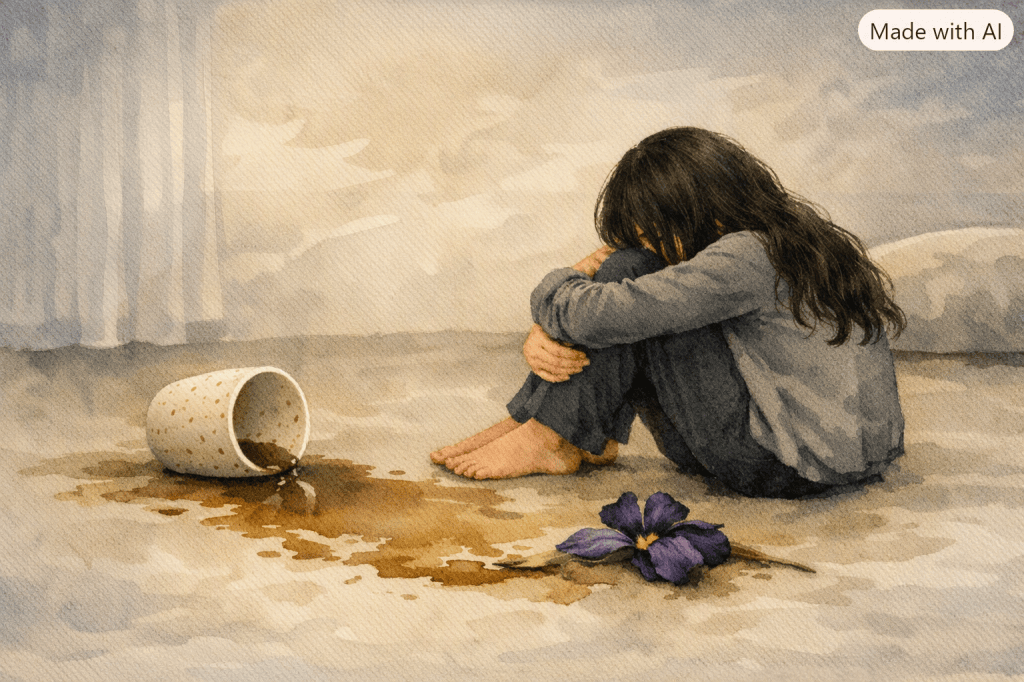
There are truths about transformation that nobody teaches you gently. They arrive the hard way, through seasons that strip you down, through moments that don’t ask permission before they change you. And maybe the hardest truth of all is this: the things that shape us the most are rarely the things we wanted. They’re the things that hurt, the things that interrupted our lives, the things that forced us into becoming someone we didn’t yet recognize.
Some wounds don’t disappear.
Some wounds become something.
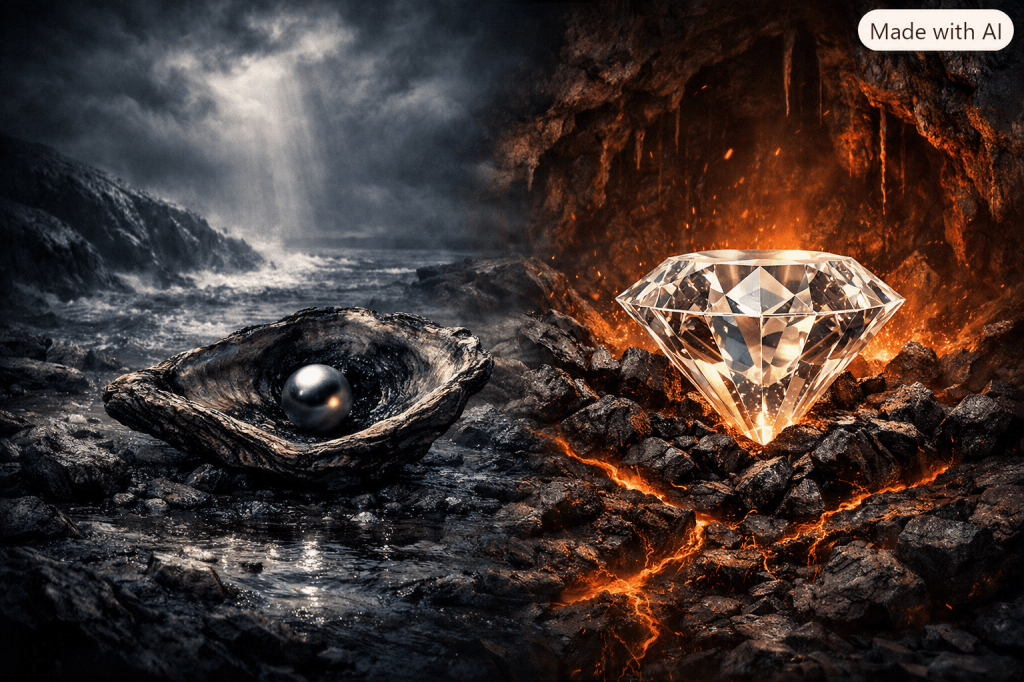
A pearl begins with an intrusion, a grain of sand slipping into an oyster, something foreign, something that doesn’t belong. It irritates, it wounds, it threatens. The oyster can’t spit it out, can’t escape it, can’t undo what’s been done. So it does the only thing it can: it begins to cover the pain, layer by layer, hoping that burying it will keep it from destroying what’s left.
The wound doesn’t vanish.
It transforms.
And when I learned that, I saw my own story in it, the betrayals that cracked something inside me, the losses that made breathing feel like labor, the seasons that didn’t just bruise but rearranged me. None of it was meant to be there. None of it was gentle. But it forced me into a kind of healing that wasn’t soft. It was survival.
Pearls take years to form.
Years of irritation.
Years of layering over what should have never happened.
People admire the shine, the elegance, the quiet beauty. They never see the raw center. They never see the thing that caused the ache. They want the wisdom without the nights that carved it. They want the strength without the breaking.
But that depth, that credibility, comes from surviving what should have ended you. That’s not a scar.
That’s a pearl.
If the pearl is a wound that healed beautifully,
the diamond is pain that refused to stay ordinary.
Diamonds aren’t born in calm places. They form miles beneath the earth’s surface, where pressure crushes and heat burns beyond imagination. Down there, carbon, the same element found in ashes and fragile things is trapped under thousands of tons of weight. It’s scorched by temperatures that could melt everything else. And it stays there not for years, not for centuries, but for millions of years.
Under that relentless pressure, the carbon rearranges itself. Its atoms lock together so tightly that nothing can break them apart. That’s how the strongest material on earth is formed, not by comfort, but by compression. Not by ease, but by endurance.
The pearl and the diamond are siblings.
Both born from suffering.
Both shaped by what tried to destroy them.
The pearl teaches softness, the art of layering over pain until it gleams.
The diamond teaches strength, the art of becoming unbreakable through pressure.
Both are transformations that take time. Both are stories of survival written in material.
Maybe healing isn’t about erasing what happened. Maybe it’s about letting it change your structure. Letting it make you rare. Letting it make you someone who carries both softness and strength, the pearl and the diamond.
So if life feels heavy, if the pressure feels unbearable, if the wound feels like it will never stop aching, remember:
pearls are made from irritation,
diamonds from pressure,
and you from everything you survived.
You’re not being crushed.
You’re being formed.