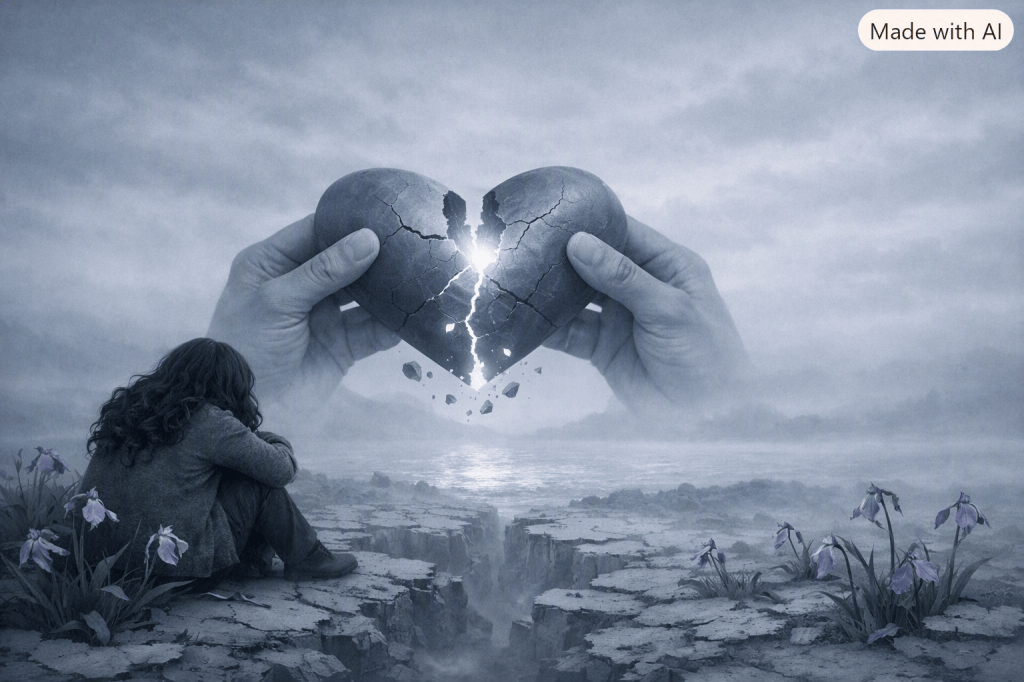
Takotsubo cardiomyopathy is a medical term for something heartbreakingly simple. It happens when emotional shock becomes so unbearable that the heart physically breaks. Doctors call it stress‑induced cardiomyopathy. People call it dying of a broken heart. The heart weakens, its shape changes, and grief stops being just a feeling. It becomes a wound, a collapse, a quiet surrender.
Heartbreak can kill. Not metaphorically, not poetically, but literally. Human emotions are heavier than bone. They press on the ribs, slow the breath, and change the way a person moves through life. Some heartbreaks don’t stop the body, but they extinguish the light inside it. They leave people walking around like shadows of who they used to be alive, but not really living.
I once heard two stories that never left me. A pair of grandparents who had lived one long, shared life, when one died in the hospital, the other followed the next day, no illness, no warning, just a heart that refused to beat alone. And a woman who waited years for a baby, only to wake from anesthesia to learn her child had died. Her heart shattered instantly, and she died right after. Some losses are too heavy for the body to bear.
Takotsubo cardiomyopathy taught me that heartbreak is not just emotion, but force. It crushes, reshapes, and leaves people changed forever. Some hearts break and never recover. Some keep beating anyway. But in both cases, the pain is real, the loss is real, and the human heart, fragile and brave, carries more than anyone ever sees.